On this page
- Land Clearing Services in the Hill Country: Cedar, Lots, Site Preparation and Excavation Referrals
- Vegetation and Terrain in the Hill Country: Cedar, Live Oak and Caliche
- Clear Cedar, Keep the Oaks: Forestry Mulching, Canopy Percent and Spring Recovery
- Land Clearing Cost in the Hill Country per Acre: Cedar Mulching Services Priced by Canopy
- Rules Before You Clear Your Land in the Hill Country: Aquifer, Warbler, Oaks and Burn Bans
- Hill Country Counties Our Land Clearing Company Serves from Johnson City, TX
- FAQ
Land Clearing Services in the Hill Country: Cedar, Lots, Site Preparation and Excavation Referrals
Five services cover most of the calls Teo takes from Travis, Hays and Comal. Here are the land-clearing services available from the Johnson City yard, each priced before the trailer moves.
- Land clearing to dirt for a slab or a barn pad: $2,000 to $4,500 per acre, rough grade included.
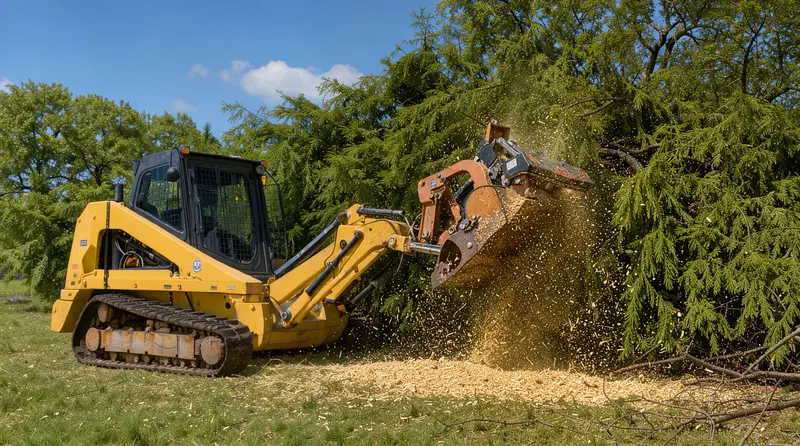
- Forestry mulching: a forestry mulcher chews standing juniper into mulch and leaves the ground covered. Mulching services run $900 to $4,000 per acre by canopy.
- Lot clearing: we clear a half-acre residential lot in Georgetown, Buda or Boerne in one skid steer day, $2,800.
- Brush clearing and brush removal: juniper regrowth, agarita, persimmon and mesquite along fence lines, by the day.
- Stump grinding at $4 per inch, $175 minimum per stump, and selective tree removal where the brush is braided into the oaks.
We specialize in brush and tree work; site preparation stops where concrete starts. We do not pour slabs, drill wells or set septic, and I know people in Blanco and Hays who do. Excavation services beyond a rough grade go to an excavation contractor Teo can name. Right of way clearing for a ranch road, down to the culvert line, and forestry services like thinning a brake for wildlife run on the same rates. The right equipment for cedar is a mulcher, not a dozer. Advanced equipment and specialized equipment only pay off when the operator reads the canopy, so equipment and expertise are one line on our quote. We handle projects from a Buda lot to a 300-acre Gillespie ranch. Name the service your tract needs and we clear it.
Vegetation and Terrain in the Hill Country: Cedar, Live Oak and Caliche
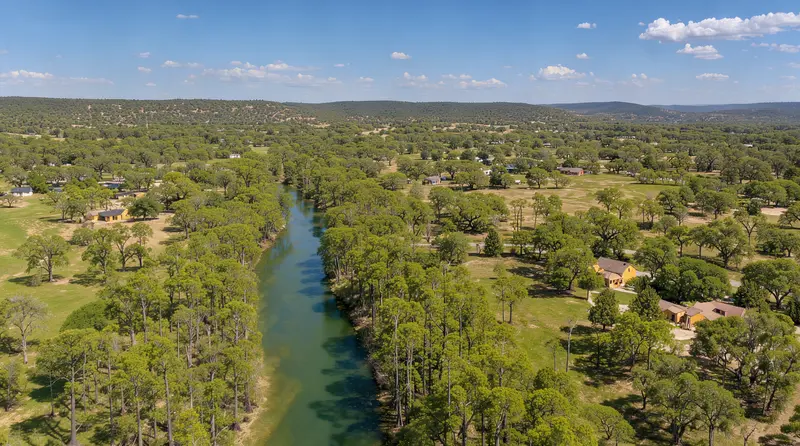
Ashe juniper, which every rancher from Kerrville to Georgetown calls cedar, stands at 40 to 70 percent canopy on tracts nobody has grazed hard in thirty years. It grows on limestone with two to six inches of topsoil, and the caliche sits right under that. Live oak motts hold the good ground. Mesquite moves onto the flats toward Guadalupe and the south side of Bexar. Left alone, juniper will overgrow a pasture from 15 to 40 percent canopy in twenty years, and overgrown land carries fewer animal units every one of those years.
Rock changes the work. Caliche and limestone ledges wear mulcher teeth about twice as fast as clay does, so rock adds a day on these tracts and I say so before the quote. The 300-hp machine handles anything on the tract; the skid steer handles stems to about 8 inches. Thin topsoil also means the mulch matters. A mulcher turns standing vegetation into mulch two to three inches deep, and that mulch holds what soil there is through the first September rain. Trees and brush that go into a burn pile hold nothing. Cedar does not need rain to spread. It needs you to look away for ten years.
Clear Cedar, Keep the Oaks: Forestry Mulching, Canopy Percent and Spring Recovery
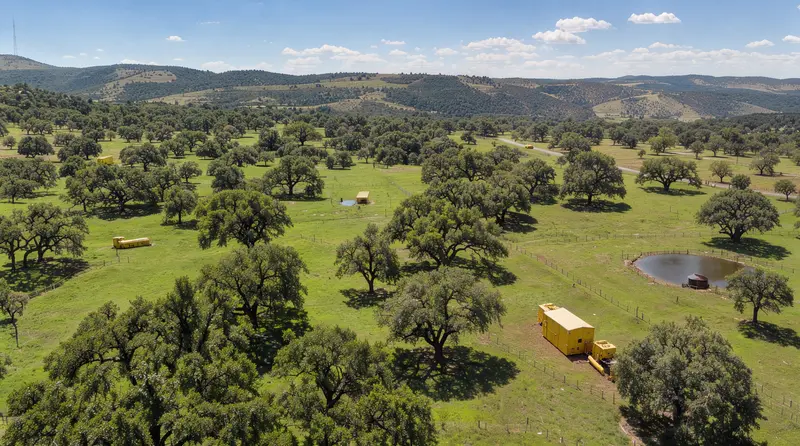
Every 10 points of canopy is money, both ways. AgriLife research on ashe juniper shows a mature canopy intercepts the first inch of a rain before it reaches the ground and shades out the grass under it. When I wrote EQIP plans, the target on treated acres was under 10 percent canopy, and that is still the number I clear to. We cleared 42 acres in Blanco County that I walked at 55 percent canopy. Six days on the 300-hp mulcher, $27,500 plus transport. The spring below the stock tank ran again the next wet season. The log read seven acres per day; efficient clearing is the machine matched to the canopy.
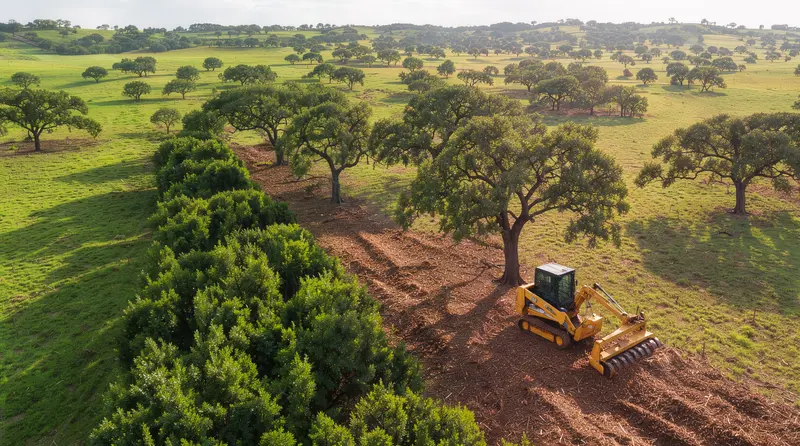
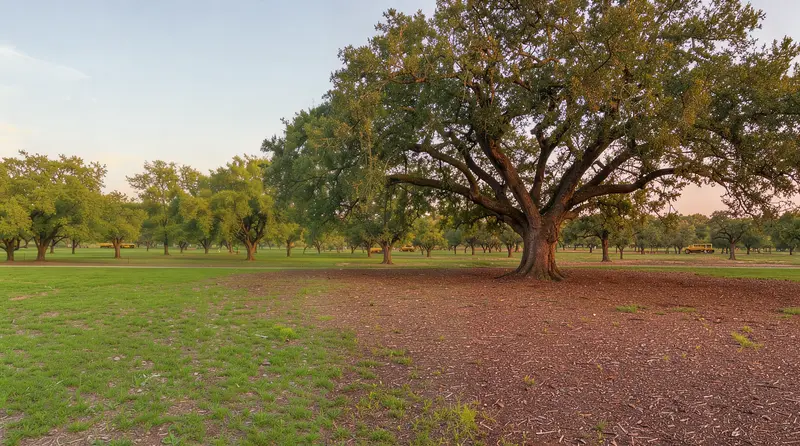
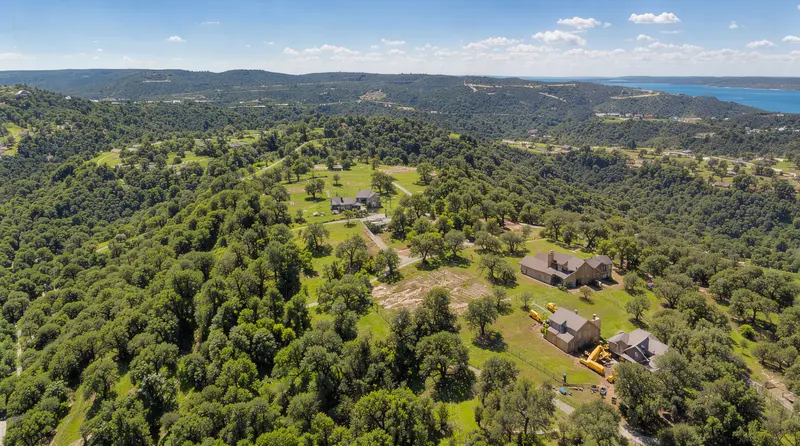
Selective clearing is the other half of the job here. On a 3-acre hillside in Dripping Springs, Hays County, we took the juniper out of the oaks for the view and left every live oak standing: two days on the skid steer, $5,600. Cedar comes back from seed, not from the stump, so a tract we clear to under 10 percent stays open with a light pass every five or six years. Land management and vegetation management on that schedule cost a fraction of one dense clearing project. Mark the oaks you want on the walk and we clear around them.
Land Clearing Cost in the Hill Country per Acre: Cedar Mulching Services Priced by Canopy
Land clearing here runs $900 to $4,500 per acre, and canopy sets where you fall in that range. Rock or caliche adds one day, stated on the quote, not discovered on the invoice. Two dedicated land clearing machines, one price sheet.
- Light juniper, under 30 percent canopy: $900 to $1,400 per acre. Medium, 30 to 60 percent: $1,800 to $2,600. Dense old-growth cedar or mesquite: $3,000 to $4,000.
- Clear land to dirt for a build: $2,000 to $4,500 per acre by density.
- Skid steer mulcher by the day: $2,800, transport included within 60 miles of Johnson City. 300-hp mulcher: $4,200 a day plus transport.
- Stumps $4 per inch, $175 minimum. Bush hogging $60 to $90 per acre, $400 minimum. Dozer $160 per hour. Haul-off $650 to $1,200 a load, $1,100 minimum service call.
A 1.2-acre lot in Liberty Hill, Williamson County, took one skid steer day to clear: $2,800. Large jobs over 20 acres get a per-acre number and lots get a day price. Both are cost-effective against a dozer that leaves you a pile and a burn ban. Call (832) 987-3495 or send the form, and Teo will call you back before the end of the business day to set the walk on your acres of land.
Rules Before You Clear Your Land in the Hill Country: Aquifer, Warbler, Oaks and Burn Bans
No state permit covers land clearing and brush removal in Texas, so you can clear your land without asking Austin. This region still carries more local rules than any we work, and the most regulated land clearing services in Texas sit on the Recharge Zone. I check five before the quote.
- Edwards Aquifer Recharge Zone in Travis, Hays, Comal, north Bexar and Kendall: TCEQ requires a Water Pollution Abatement Plan before you grade or clear mapped recharge land.
- Golden-cheeked warbler: TPWD and USFWS protect mature cedar-oak canopy from March to July in eight counties from Travis to Kerr. We clear those tracts August through February.
- Oak wilt: Texas A&M Forest Service says do not wound live oaks February to June. We mulch around the oaks and do not cut an oak limb in that window.
- City tree rules: Austin heritage trees, San Antonio significant and heritage trees, Georgetown and Boerne ordinances inside city limits and the ETJ.
- Burn bans come from the county judge or commissioners court, and TCEQ outdoor burning rules govern piles. Mulch is not a pile. LCRA rules apply on the Highland Lakes shoreline, GBRA on Canyon Lake.
A construction site in a FEMA floodplain along the Pedernales needs a county floodplain development permit before we clear, and land development inside a city limit needs the tree survey first. Send Teo the county and we will minimize the paperwork to what applies.
Hill Country Counties Our Land Clearing Company Serves from Johnson City, TX
Ten counties, each with its own page. Travis (Austin), Williamson (Georgetown, Liberty Hill), Hays (Dripping Springs, San Marcos, Buda), Burnet, Bexar (San Antonio north side), Comal (New Braunfels, Bulverde), Guadalupe (Seguin), Kendall (Boerne), Kerr (Kerrville), Gillespie (Fredericksburg). Guadalupe sits on the Central Texas side of I-35 but buys its clearing from the San Antonio market, so it lives here. Surrounding areas like Blanco, Llano and Mason are home ground and carry no transport. Census Building Permits Survey 2025 counted 4,727 single-family permits in Travis and 51 in Gillespie, which understates the ranch work there because no permit is needed outside city limits. If you need land cleared before a fall build, open your county page or send the form for land clearing today with your clearing needs.