On this page
- How Forestry Mulching and Bulldozing Each Clear Land
- Forestry Mulching vs. Bulldozing Cost per Acre and per Day
- Speed: Acres per Day for a Mulcher vs. a Dozer by Canopy Percent
- Debris: Layer of Mulch vs. Burn Piles vs. Haul-Off
- Soil, Erosion and Roots: Why Traditional Land Clearing Strips Topsoil
- When You Need a Dozer Anyway: Stumps, Pads, Driveways, Stock Tanks
- Which Method to Clear Your Tract: Cedar Pasture, Pine Lot, Mesquite Reclaim or Homesite Pad
- FAQ
How Forestry Mulching and Bulldozing Each Clear Land
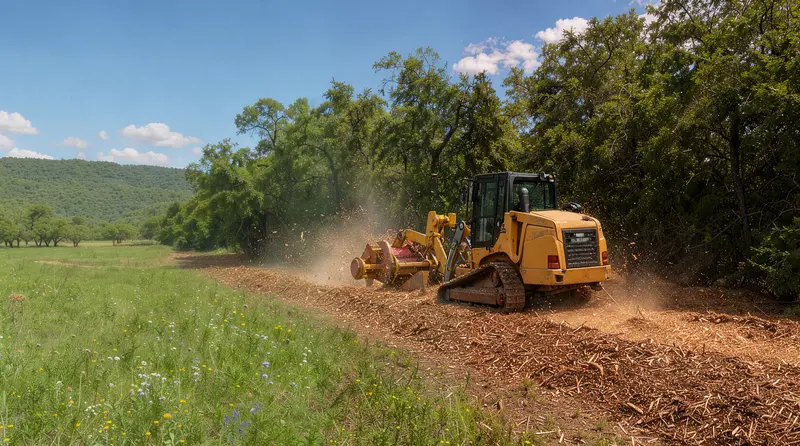
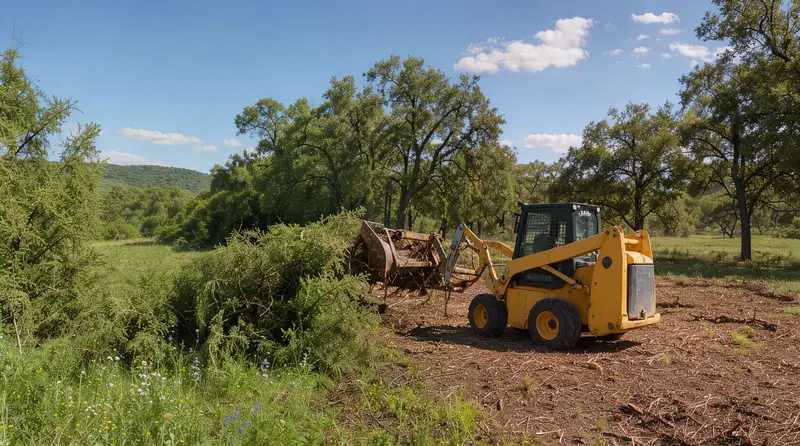
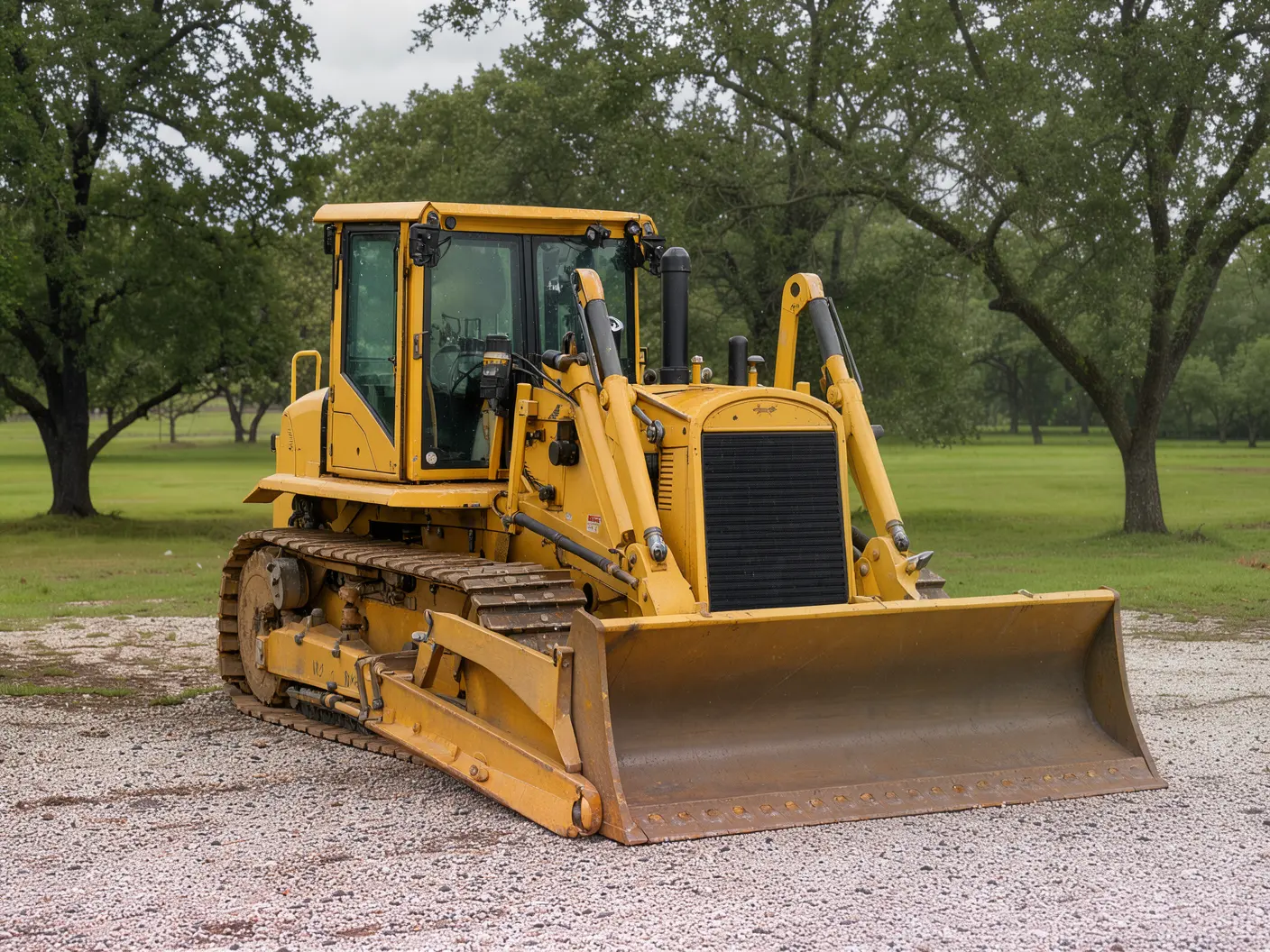
A forestry mulcher is a mulching head on a skid steer or a dedicated carrier: a spinning drum fitted with steel teeth that grinds everything standing into wood chips and spreads them where the tree stood. The teeth shred vegetation to chip size in one motion. It uses a single machine and a one-step process. Cut, grind, spread, done, in a single pass on light brush and two on dense cedar. A bulldozer pushes trees over, root ball and all, and piles them. Unlike bulldozing, mulching leaves roots in the ground and the topsoil in place. Traditional land clearing with a dozer then needs an excavator to pull stumps, a loader to stack the brush piles, and a burn day or a truck. That is the labor of multiple machines against one machine. Mulching is faster on anything that does not need a slab.
Forestry Mulching vs. Bulldozing Cost per Acre and per Day
The skid steer mulcher runs $2,800 a day, transport included within 60 miles of Johnson City, Lindale or Weatherford. The 300-hp carrier runs $4,200 a day plus transport. Per acre that lands at $900 to $1,400 for light cedar, $1,800 to $2,600 medium and $3,000 to $4,000 dense. The dozer runs $160 an hour with operator, and a cleared acre to bare dirt lands at $2,000 to $4,500 once you add piling and haul at $650 to $1,200 a load. Burning debris is cheaper than hauling only when the county judge lifts the burn ban on your schedule and TCEQ rules allow the pile. On 8 jobs in 10 mulching is the cheaper finished acre. Call (832) 987-3495 with your acreage and Teo will have both numbers for you before the end of the business day.
Speed: Acres per Day for a Mulcher vs. a Dozer by Canopy Percent
The skid steer will clear 3 to 5 acres a day under 30 percent canopy, 1 to 2 acres in medium cedar, which is ashe juniper, and under an acre in old-growth. The 300-hp machine clears 5 to 8 acres a day in medium cedar. A D6-class Deere dozer pushes 4 to 6 acres a day but leaves piles, so the job is not finished when the dozer leaves. On the 42 acres we cleared in Blanco County, 55 percent canopy, the 300-hp machine took 6 days and the ground was finished on day 6. A dozer would have pushed it in 8 and then waited weeks on a burn ban. Add a day for rock in the Hill Country, a day for wet blackland in North Texas, with either machine. Speed also depends on slope: over 20 percent, acres per day halve for a track or wheel skid steer.
Debris: Layer of Mulch vs. Burn Piles vs. Haul-Off
Mulching leaves a 2 to 4 inch layer of mulch, organic material that breaks down in two to three seasons, helps the ground retain moisture, and gives seed something to catch in. Bulldozing leaves brush piles 10 feet high that sit until the burn ban lifts or until a truck hauls them at $650 to $1,200 a load, 6 to 12 loads per wooded acre. The cleanup is the hidden half of traditional clearing methods, and of all land clearing methods bulldozing leaves the most of it. Storm damage and fallen trees mulch fine; a trunk over 10 inches goes to the stump grinder or gets bucked with a chainsaw first. Mulching means minimal environmental impact: no smoke, no TCEQ complaint and no fire crossing property lines in August.
Soil, Erosion and Roots: Why Traditional Land Clearing Strips Topsoil
A dozer blade, like all traditional methods, takes the top 4 to 6 inches of soil with the root ball, and on Hill Country limestone that is most of the topsoil there is. Mulching leaves roots, so soil disturbance is near zero and the root mat prevents erosion on the first hard rain. On blackland, a dozer in winter smears the clay and leaves ruts that hold water until June; a tracked machine floats. On East Texas sand the erosion risks are gullies: strip the land bare in January and you have a ditch by April. Chips feed the soil health by enriching the soil as they rot, and the shade they throw helps suppress annual weeds while grass gets started. A cow will tell you where the water is before a hydrologist will. She finds the seep on the mulched tract first, every time. AgriLife research backs it: clear the cedar, leave the roots, and more rain reaches the grass and the springs.
When You Need a Dozer Anyway: Stumps, Pads, Driveways, Stock Tanks
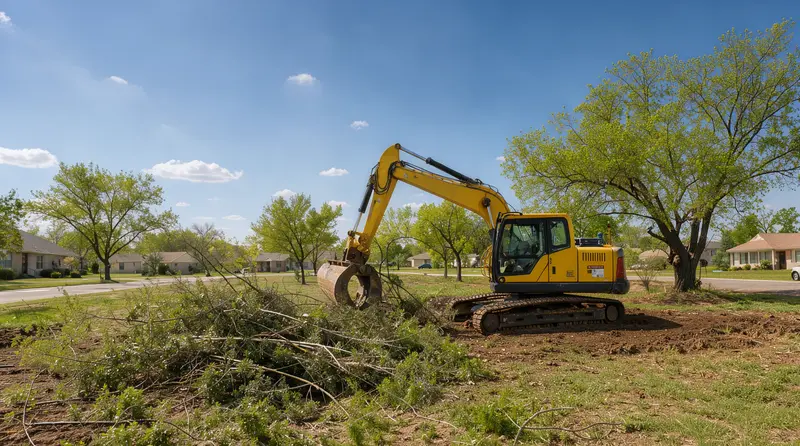
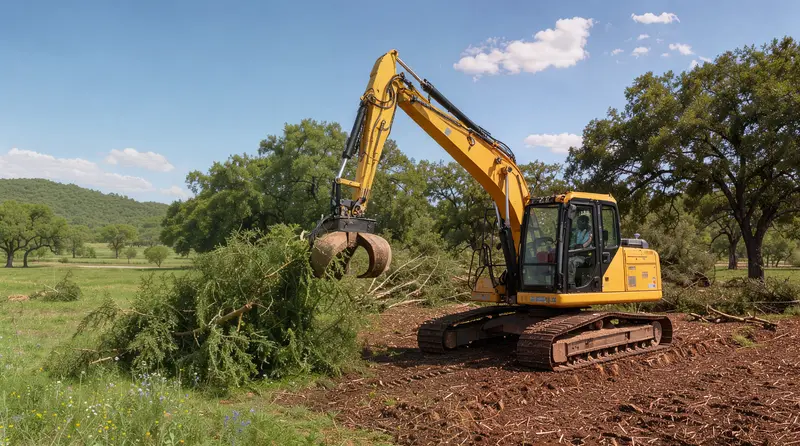
Four jobs need the dozer no matter what: a building site, a driveway, a stock tank and tree stumps under a slab. The head grinds a stump to grade but leaves the roots; a slab wants them out, so the footprint plus 10 feet gets grubbed at $160 an hour. Site prep, cut and fill, and a pipeline right-of-way that must be bare are dozer work. Mesquite is the fifth case: it comes back from the root crown, so on a pasture reclaim like the 8 acres we cleared in Parker County, the head clears and a dozer or chemical finishes the crowns. A rotary brush hog behind the tractor handles the saplings afterward at $60 to $90 an acre. Larger trees over 12 inches that have log value get felled with a saw and sold before either machine arrives. Fell the money first, mulch the rest.
Which Method to Clear Your Tract: Cedar Pasture, Pine Lot, Mesquite Reclaim or Homesite Pad
| Tract | Method | Why |
|---|---|---|
| Cedar pasture, Hill Country | Mulch it | Roots hold the thin soil, chips hold the rain, oaks stay |
| Pine lot, East Texas | Mulch yaupon and underbrush, saw the timber | 15 acres in Smith County: 3 days, $11,400, pines kept |
| Mesquite reclaim, North Texas | Mulch, then dozer or chemical on crowns | Root crown resprouts; bush hog each June |
| Homesite pad | Mulch the lot, dozer on the footprint | Grub and compact where the slab goes, mulch the rest |
Property owners who have land cleared for grazing or a view want a mulcher to clear it. Anyone who needs to bulldoze a pad or a tank needs the dozer, and usually mulching first for the rest of the lot. Dense vegetation of any kind, briar, undergrowth, yaupon, huisache, woody growth to 8 inches, goes through the skid steer head. Buckthorn and multiflora rose are northern problems and invasive plants here are cedar, yaupon and Chinese tallow; the drum takes trees as well as brush and the dozer takes the ground with them. Fill out the form or call (832) 987-3495. Teo will call you back before the end of the business day with the method and the price for your acres.