On this page
- What Land Clearing Means and What It Includes
- Land Clearing Methods: Mulching, Grubbing, Dozing, Hand Clearing and Burning
- Equipment Used to Clear Land: Forestry Mulchers, Skid Steers, Dozers, Excavators and Rotary Cutters
- Residential, Commercial and Agricultural Land Clearing
- Do You Need a Permit to Clear Land in Texas?
- Can NRCS Pay for Part of the Land Clearing Process? EQIP in Plain Terms
- Does Clearing Land Add Property Value?
- What Happens After the Land Clearing Project: Grading, Seeding, Deferment, Building
- Get a Free Estimate to Clear the Land
What Land Clearing Means and What It Includes
Land clearing covers four jobs: cutting down trees or grinding the standing growth, clearing away the debris, taking out stumps and roots where a slab or road goes, and leaving the ground stable. Other words for it are brush and tree removal, lot clearing, grubbing, forestry mulching and land preparation, and each means a different amount of work. Mulching leaves roots and a layer of chips. Grubbing pulls roots. Site preparation goes on to a pad. A land clearing company selling land clearing services should say which one it quoted. On our jobs the quote names method, acres, machine and days. Land-clearing is not tree removal services: a tree service takes down one oak over a roof; we clear an acre of cedar and leave it as mulch.
Land Clearing Methods: Mulching, Grubbing, Dozing, Hand Clearing and Burning
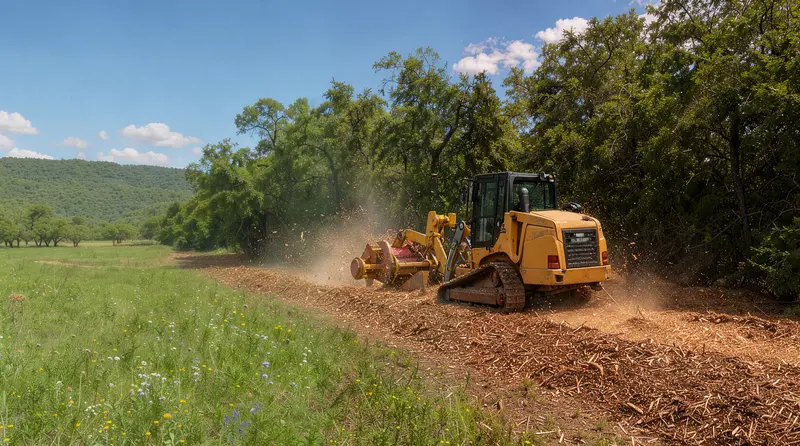
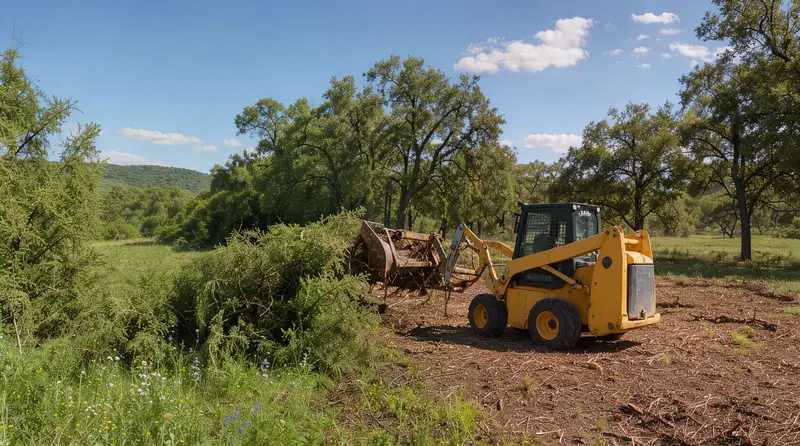
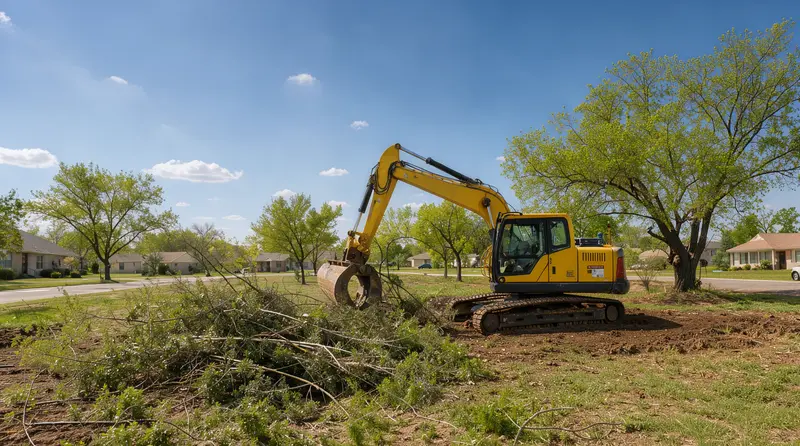
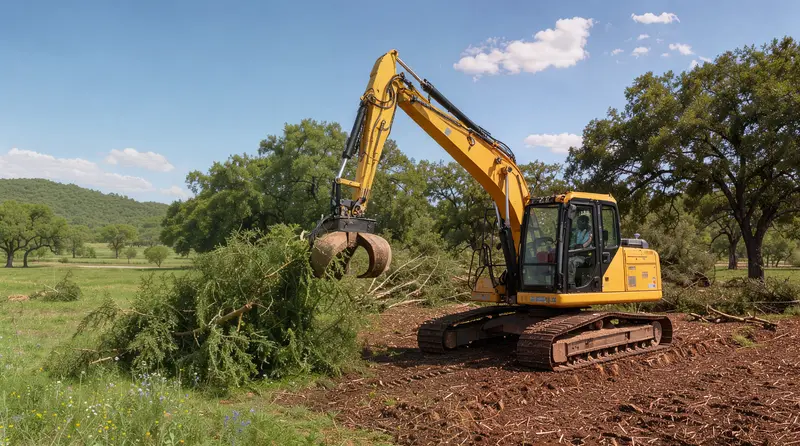
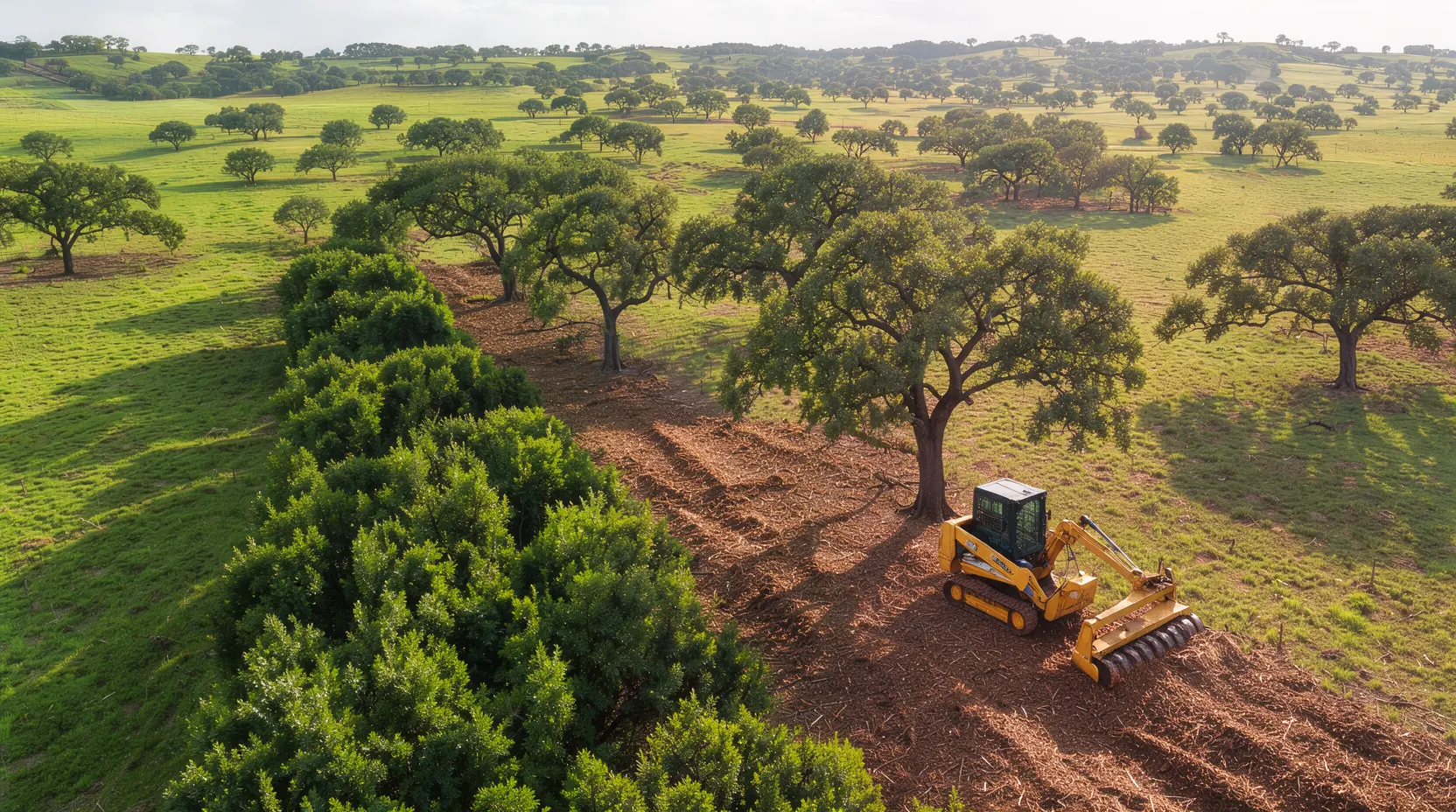
Five land clearing methods are in use in Texas, and the method of land clearing decides most of the price. Forestry mulching grinds trees and brush where they stand and spreads chips 2 to 4 inches deep; it is effective for removing certain types of vegetation, cedar, light brush and thick brush up to about 8 inches with the skid steer. Grubbing uses a dozer or excavator to remove trees whole with the roots; it is the right method of clearing for a slab or driveway and the wrong one for pasture, because it strips topsoil. Dozing pushes every shrub and trunk into piles. Hand clearing with chainsaws is manual labor to cut down trees one at a time, selective clearing or targeted clearing around oaks. Burning piles waits on the county judge's burn ban and TCEQ outdoor burning rules, and the risk of the fire spreading in August is real. Choosing the right method starts with what you want the ground to do next year and the size of the area to be cleared.
Equipment Used to Clear Land: Forestry Mulchers, Skid Steers, Dozers, Excavators and Rotary Cutters
Professional land clearing crews like ours run two mulchers, a dozer and a bush hog, and that specialized equipment covers 9 clearing projects in 10. The skid steer mulcher is $2,800 a day and handles stems to 8 inches. The 300-hp mulcher is $4,200 a day plus transport and takes anything standing. Bulldozers and excavators run $160 an hour with operator for grubbing, pads and stock tanks. The rotary cutter handles grass and saplings under 2 inches at $60 to $90 an acre. Heavy machinery is not the same as the right machinery: a bulldozer on wet blackland sinks to the belly pan while a tracked mulcher floats. An excavator with a mulching head reaches a slope a skid steer cannot.
Residential, Commercial and Agricultural Land Clearing
Residential land clearing is clearing a plot of land under 2 acres for a house: footprint grubbed, the rest mulched, stumps ground. Commercial clearing is land development, the same work on more acres with access for construction vehicles and a site plan behind it, and residential and commercial lots both need county floodplain approval if FEMA maps them wet. Agricultural land clearing is my background: clearing land for farming or grazing, usually cedar or mesquite off extensive land in brush, to raise grazing capacity. A medium cedar tract carries about one animal unit per 25 acres; the same ground in grass carries one per 12 to 15. Turning land for agriculture back to grass also protects the 1-d-1 ag valuation, and clearing land for agricultural purposes is the cheapest land use change I know. Tell me which of the three you are, because the quote and the method change with the answer.
Do You Need a Permit to Clear Land in Texas?
No state permit is required to clear your own land in Texas, but four local rules can apply. Inside the FEMA mapped floodplain the county requires a floodplain development permit before dirt moves, and Harris County adds the Flood Control District. City tree ordinances in Austin, San Antonio, Georgetown, Leander, Boerne and Fort Worth protect heritage trees inside the limits and the ETJ. On the Edwards Aquifer Recharge Zone in Travis, Hays, Comal, Bexar and Kendall, TCEQ wants a Water Pollution Abatement Plan first. Mature cedar-oak canopy in golden-cheeked warbler counties is cleared outside the March to July nesting window under TPWD and USFWS rules. Burning needs no paperwork, only an open burn ban status, and depending on the location the county judge lifts it for weeks or months. Call (832) 987-3495 with the county and I will tell you which of the four touches your tract.
Can NRCS Pay for Part of the Land Clearing Process? EQIP in Plain Terms
Yes. EQIP Brush Management, practice code 314, pays 50 to 75 percent of the NRCS payment-schedule rate once the plan is approved and the work is certified. The plan requires careful reading: a canopy target, usually under 10 percent, a deferment from grazing after the work, and sometimes a seeding mix. I wrote brush plans for twelve years. The brush never read one. Too many sat in a drawer, which is why I bought a mulcher in 2014. You pay the contractor first and NRCS reimburses on the schedule rate, not my invoice, so a $2,200 acre might bring back $450 to $600. Proper land management techniques are written into the plan and are important in areas where springs feed a creek. The land clearing is essential, but it is step one.
Does Clearing Land Add Property Value?
Cleared pasture in the Hill Country sells for more per acre than cedar brake, and the gap pays for the work on most tracts I have walked. Value comes three ways: grazing, water and sight lines. Cedar past 30 percent canopy is what makes land clearing necessary on a working ranch. AgriLife research shows a mature ashe juniper canopy intercepts the first inch of rain; the 42 acres we cleared in Blanco County went from 55 percent canopy to under 5, and the spring below the stock tank ran again the next wet season. Selective work on 3 acres above Dripping Springs opened the view and kept every live oak for $5,600. Light cedar at $900 an acre is the cheapest value I know how to add. Effective land clearing can protect the environment rather than hurt it: more water, less soil erosion once grass takes, room for new grass, and better habitat for wildlife like quail and turkey. Land clearing can also cut the wildfire fuel load. Springs are the resources for future generations on a ranch, and the environmental impact of cedar is that it drinks them. Keep the live oak motts and the ecosystem gets more usable, not less.
What Happens After the Land Clearing Project: Grading, Seeding, Deferment, Building
After clearing, the ground needs one of four things: grading, seed, rest or a slab. A homesite gets grubbing and a pad, with mulch pushed to the perimeter as erosion control measures on the slope; clearing the land and preparing it for a slab are two invoices. Preparing land for grass means a native mix broadcast into the chips in October or February and a grazing deferment of one growing season so roots set. Mulch over 4 inches slows grass, so the crew spreads it thin. Cedar comes back from seed, not the stump, so a bush hog pass in year two and a spot spray in year three finish the job; mesquite comes back from the root crown and needs grubbing or chemical. Lots overgrow again in 3 years without that plan. Trees and other vegetation you kept, like post oak and live oak, get a 10-foot ring of mulch and no bark wounds in the February to June oak wilt window. Do not build a new barn on the chip layer; grub the footprint first.
Get a Free Estimate to Clear the Land
Free on-site estimate within 60 miles of Johnson City, Lindale or Weatherford, whether you need to clear 1 acre or 100. I walk the property with you, read the canopy, and the quote lists method, acres, days, machine and the extra-day rules for rock and wet blackland before the price. Insured crews. We do not pour concrete, drill wells, install septic or demolish houses. Fill out the form or call (832) 987-3495. Teo will call you back before the end of the business day.