On this page
- Land Clearing Services Available in Bell County
- Residential Land Clearing for New Homesites in Temple, Salado and Killeen
- Cedar Forestry Mulching and Brush Clearing Across Bell County
- How Much Does Land Clearing Cost per Acre Here?
- Terrain, Soil and Vegetation on Bell County Acreage
- USACE Shoreline Rules, Burn Bans and Oak Wilt Windows Before Land Clearing
- Areas We Serve in Bell County: Temple, Salado, Killeen, Harker Heights
- Ready to Clear Your Cedar? Get an Estimate
- FAQ
Land Clearing Services Available in Bell County
Six posted services cover the land clearing projects we see along I-35.
- Forestry mulching services on cedar and mesquite: $900 to $4,000 an acre by canopy.
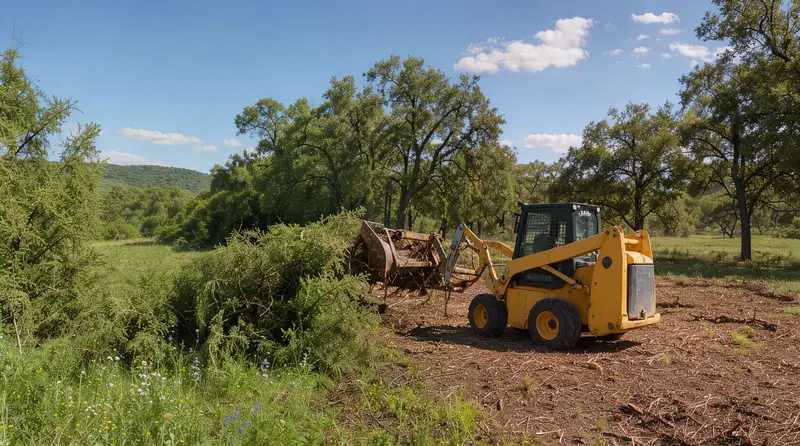
- Lot clearing for a homesite: a half-acre lot is one skid steer day, $2,800.
- Clearing brush and underbrushing along creek bottoms and fence rows, by the day.
- Stump grinding: $4 per inch of diameter, $175 minimum per stump.
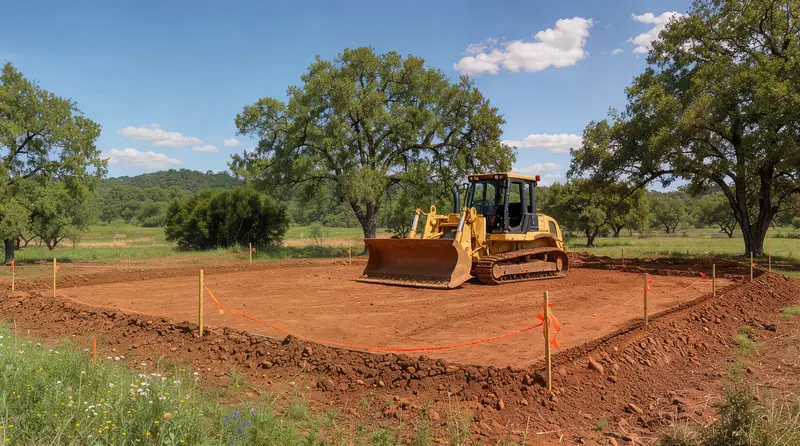
- Site prep and dirt work services: grubbing, rough grading and pad drainage at $160 an hour with operator.
- Bush hogging on agricultural land: $60 to $90 an acre, $400 minimum.
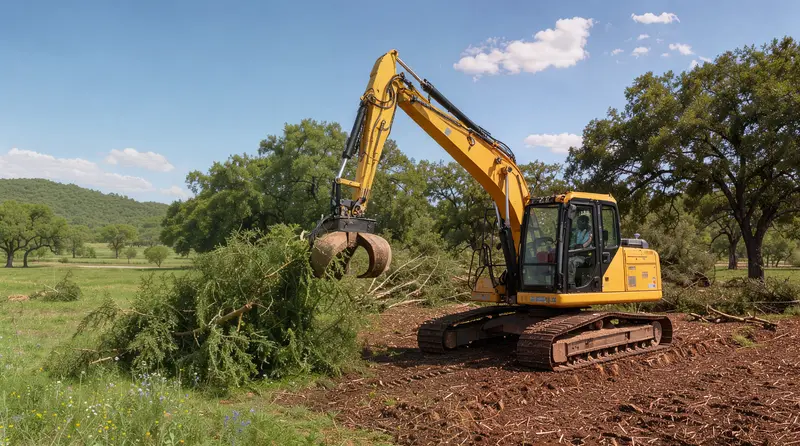
Our crews bring the equipment to handle 8-inch stems on the skid steer and old cedar, mesquite, pine and hardwood alike on the 300-hp machine. Tree removal and storm cleanup go by the hour. Concrete, wells and septic are other trades.
Residential Land Clearing for New Homesites in Temple, Salado and Killeen
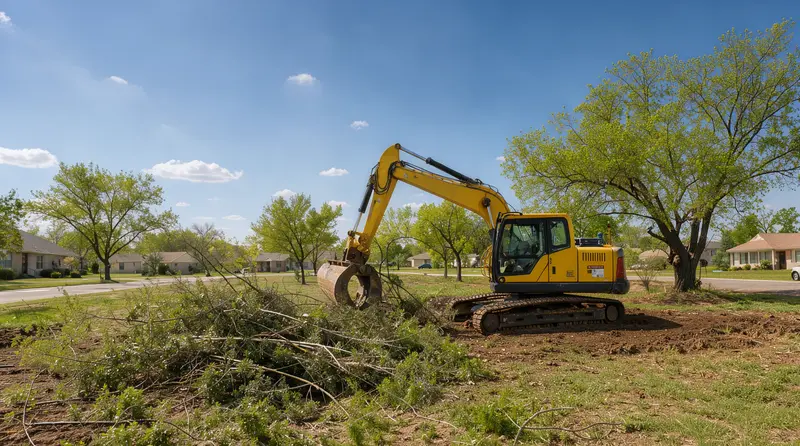
The county permitted 2,170 single-family homes in 2025 per the Census Building Permits Survey, the most in Central Texas outside the Austin metro. Fort Cavazos keeps Killeen building, and Salado keeps selling estate lots in the cedar. Most residential jobs are one to three acres: the homeowner wants the live oaks kept, the cedar and undergrowth gone, and the pad grubbed before the slab crew comes. A 1.2-acre lot we cleared in Liberty Hill, one county south, was one skid steer day, $2,800, trees and branches mulched in place. Small residential lots pay the same day rate. Site preparation on blackland lots adds a drainage swale, because clay holds water the way limestone never will.
Cedar Forestry Mulching and Brush Clearing Across Bell County
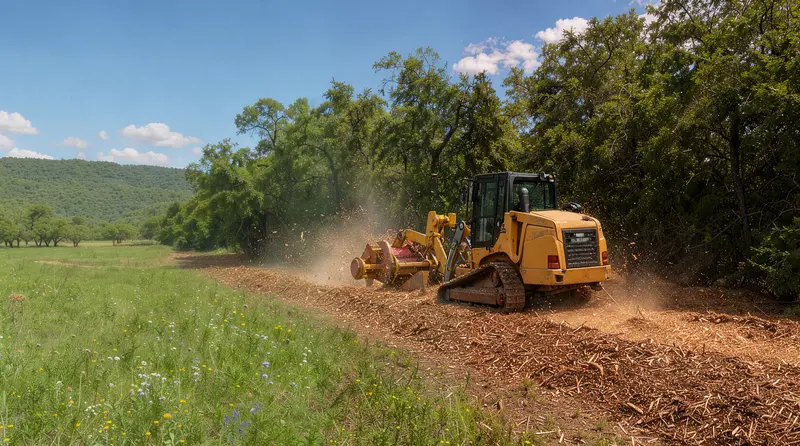
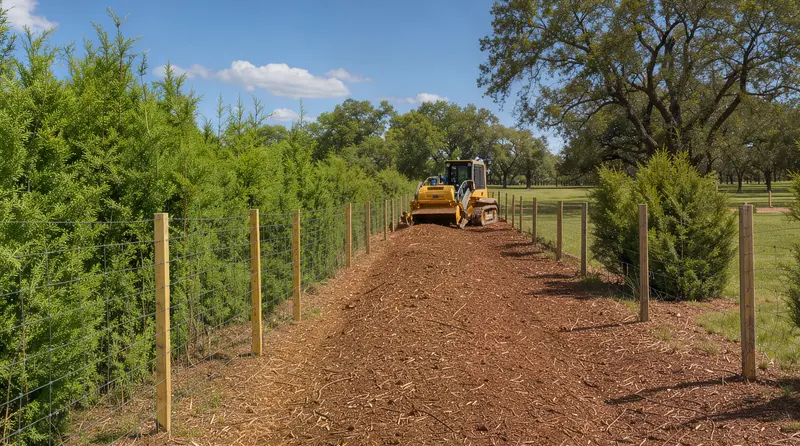
Cedar, which is ashe juniper, is the crop west of I-35, and I price it the way I wrote it into NRCS plans: by canopy percent. Mulching puts the wood back as a two to four inch mulch layer that slows erosion on the slopes toward the Lampasas River. On our jobs around Salado the mix is cedar, live oak motts to keep, and mesquite on the flats. Mesquite does not die from a bush hog pass; the root crown has to be ground. Selective clearing is the rule: cedar out, oaks kept. An 8-acre mesquite and post oak pasture reclaim we did in Parker County took two days, $8,400, with a bush hog follow-up each June. Cedar will not overgrow from the stump, only from seed, so a mulched tract stays open for years.
How Much Does Land Clearing Cost per Acre Here?
Cedar mulching runs $900 to $4,000 an acre by canopy throughout Bell County, and full site clearing to dirt runs $2,000 to $4,500. Two rules first: rock and caliche west of I-35 add a day, and wet blackland adds a day from November to April.
- Skid steer mulcher: $2,800 a day, transport included within 60 miles of Johnson City.
- 300-hp mulcher, 8 ft head: $4,200 a day plus transport.
- Haul-off: $650 to $1,200 a load, $1,100 minimum trip.
- Pond or stock tank site excavation: dozer at $160 an hour with operator.
EQIP cost-share through NRCS covers 50 to 75 percent of the payment-schedule rate for brush management, practice 314. The on-site estimate is free, and the canopy reading goes on paper while I walk the property with you. Fill out the form or call (832) 987-3495, and Teo will call back before the end of the business day.
Terrain, Soil and Vegetation on Bell County Acreage
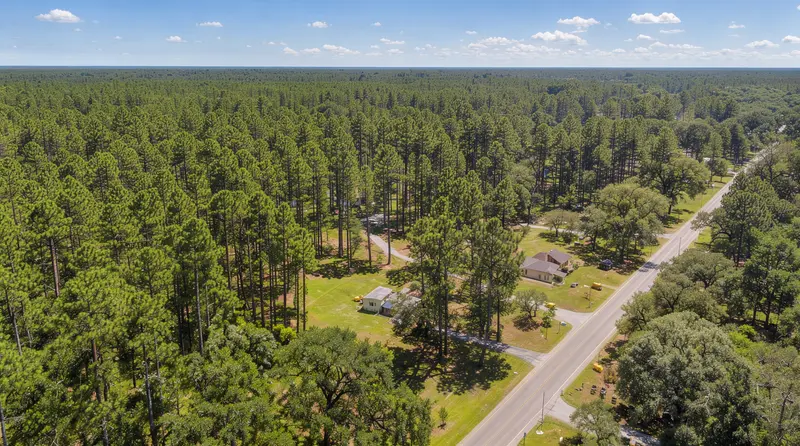
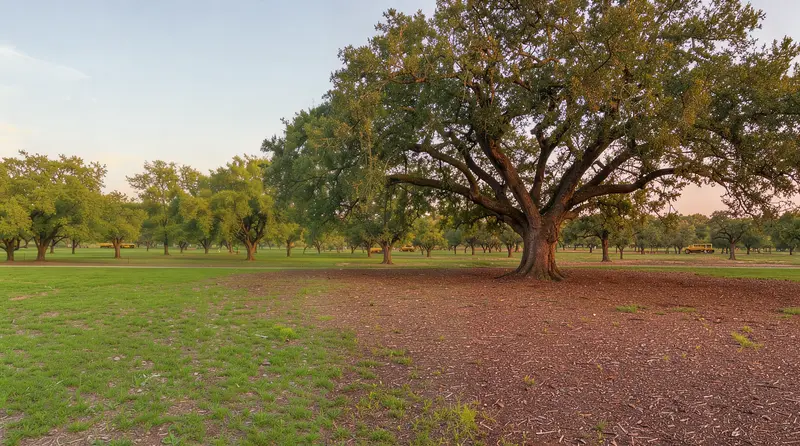
The county's line is I-35. West of it the Balcones edge lifts the ground onto limestone and caliche, where cedar and live oak hold the hills above the Lampasas River. Lots near Lake Belton and Stillhouse Hollow run 40 to 60 percent cedar canopy with oak motts worth keeping. East of I-35 the blackland prairie flattens under post oak, hackberry and mesquite. The mulcher floats on wet blackland where a dozer sinks. I read site conditions on the first pass: canopy percent, surface rock, soil color, standing water. Woodland cedar at medium canopy mulches at 2 to 3 acres a day.
USACE Shoreline Rules, Burn Bans and Oak Wilt Windows Before Land Clearing
No state permit covers clearing your own land in Texas, and Bell County's rules fit on a card. Burn bans come from the county judge or commissioners court, and TCEQ outdoor burning rules govern piles. Mulching leaves no pile. On both USACE lakes the Corps owns the shoreline strip, so nothing gets cleared below the government line without its permit. Texas A&M Forest Service asks that live oaks not be wounded February through June for oak wilt, so we mulch cedar around the oaks without touching a limb in that window. Along the Lampasas and Leon rivers the county permits dirt work on FEMA-mapped floodplain.
Areas We Serve in Bell County: Temple, Salado, Killeen, Harker Heights
Temple and Salado have their own pages. Temple carries the residential and commercial work: infill lots, commercial development pads along I-35 and SH 317, tree clearing on a new fence line at the edge of town. Salado brings cedar estate lots, Killeen brings blackland subdivisions. Temple, TX and the surrounding areas into Williamson, Milam, Falls and Coryell counties sit inside the service area, with transport on the far end. Of the 254 counties in Texas, this is where I quote two soils on one tract most often. The Central Texas page covers the region.
Ready to Clear Your Cedar? Get an Estimate
Fill out the form with the acreage and which side of I-35 you sit on, or call (832) 987-3495. Teo calls you back before the end of the business day and books the walk; the crew lead brings the canopy chart. Serving Bell County from Johnson City, with insured crews and posted prices. Blackland is a sponge in March and a brick in August.